Monday, July 12, 2010

TRASH FASHION


Today I visited the science museum to check out the temporary exhibit Trash Fashion. The display was within the new Antenna section of the museum that hosts shows exploring themes around science and technology. The Trash Fashion exhibit focused on designing out waste and included the work of Mark Liu and his zero waste pattern cut clothing, Suzanne Lee and biocouture garments (created from fabric that is grown from bio cultures and moulded into 3D shapes) and Sandy Black, showcasing her knit to fit garment processes based on 3D body scanning. All the garments on display were beautiful, and 'fashionable' - a world apart from the now extremely misrepresented stereotype of 'eco-chic' fashion. I would like everyone to see this exhibit, as it focused on the technology and innovation that is being incorporated into new clothing designs for a sustainable future. It is no longer enough to just design a nice frock or have a deep and dark design concept to produce an interesting collection - for me the garment needs to tell a story that is relevant and plays a role in changing the way we view our clothing - and improves the impact the system in which it exists has on the environment.

Wednesday, July 07, 2010

A Call for Textile Design Teachers

If you are, or know anyone, teaching textile design at a secondary school, community workshop or adult education centre please get in touch!

julia-faye@hotmail.com

Monday, July 05, 2010

VINTAGE PRIMARK

Conversation#100 "VINTAGE PRIMARK"

I recently overheard a colleague complementing another on her dress. The dress wearer thanked her and, as is often unfortunately the case these days, told that it was from Primark. Except in this instance she had bought her Primark dress from a charity shop. Faced with a bizarre combination of something I love (2nd hand clothes shopping) with something I am not so keen on (consumption of mass produced, cheap clothing in a crap retail environment) I was slightly confused as to how I felt about the purchase. It is an unfortunate fact that many of the garments in charity shops are now cheap retail cast offs and garments the charity shop would find hard to sell for less than the original price of the garment. Can a charity shop justify selling any recent garment second hand for more than would have been paid for it on the high street? Often the answer is no, as this won’t make the money charities need to run many aid and development projects. Good quality items are essential for the charity shops, as people are willing to spend more on a quality vintage item, but won’t spend more than £5 for a t-shirt they can buy for the same price new. The need for good quality stock has lead to some charity shops requesting that Primark items are not donated, as to avoid the charity shop looking like a dumping ground for the worn out, faded fast fashion basics. However, for many people the destination for unwanted clothing is either charity shop or the bin...and with charity shops wanting to improve their image and encourage good quality donations, they simultaneously increase the proportion of ‘waste’ clothing that is 'worn out' before it’s time and has no destination other than landfill. Contributions to the growing waste stream of textiles is the last thing we need, so considering the aim of many charity shops the advise would be that if you are going to buy cheap clothing, don’t consider it to be disposable. Keep it. If possible, save up and invest in something you love so much you will want to wear every year. We all need basics but we don’t need these to wear out quickly – we don’t have to spend less money on more stuff. Value the materials that you buy...and slow down the unsustainable nature of buying clothing as if it’s going out of, well...fashion.

Sunday, July 04, 2010

Ten Ways to Use Less Oil

Taken from the Greenpeace website, I love these tips for living a less oil intensive lifestyle.

As more people are becoming aware of environmental issues, the conversations I am having with people are slowly changing from telling people about the issues to telling people how they can incorporate change within their lifestyle to make a difference. Many people are now aware of the issues...they understand that something must be done, but don't know where to start and need a nudge in the right direction. Telling people how to make the changes is a step forward to just telling them about the issues. People want to create change and this 10 step guide from Greenpeace is a great example for oil consumption...

In the wake of the ongoing catastrophe of the Gulf oil spill, lots of people have been asking us how they can reduce their oil consumption in their daily lives. Here's our top ten:

1. Carpool, cycle or use public transport to go to work.

2. Choose when possible products packaged without plastic and recycle or re-use containers.


3. Buy organic fruits and vegetables (fertilisers and pesticides are based on oil more often than not).

4. Buy beauty products (shampoo, soap, make-up) based on natural ingredients, not oil.

5. Choose when possible locally produced products (less transport involved).

6. Buy clothes made out of organic cotton or hemp - not from oil derivatives.

7. Use non-disposable items in picnics and summer festivals.

8. Quit bottled water.

9. Fly less.

10. Demand that your government encourage renewable energy instead of oil

Saturday, July 03, 2010

SKINT NATION

"SKINT NATION"

We are reaching a strange time in the history of approaches to fashion consumption. With many people wanting to pay the lowest price possible for a ‘fashion bargain’ on the high street and online, it is now possible for the consumer to buy new clothing for a lower price than 2nd hand garments. The common approach to acquiring new clothing only a few decades ago was to pass them between family members and friends or buy second hand clothing as a cheaper alternative to buying new clothing from the tailor or Marks and Spencer. The image of second hand clothing today however is still understood by many people to fit in with this second rate method of purchasing cheaper clothing - not as good quality as anything you could buy new. Yet today, when we can buy new clothing for cheaper than charity shop items sometimes of higher quality, the priorities of what we desire from our clothing have changed. The low cost poor quality items that classed as second rate and looked down upon for being ‘cheap’, have now become the new, trend driven, fast fashion items that are desired and sold to thousands of people every week. When did it become cool to wear a new dress every week? When did it become OK to spend £3 on a t-shirt? Over the years we have become increasingly proud to declare a new dress was bought from Primark, ‘it only cost a tenner – I’m skint’. With recession and student debt spiralling out of control, the mass market for fashion and mainstream appeals to the ‘fashion’ driven who can get it with a limited budget and no regard for what this destroys, how other elements of the system that creates this maximum choice effect the environment. We need to look at the bigger picture in terms of the fast fashion cycle and expose the unsustainable nature of the fast fashion age. Our skint nation has developed a dangerous addiction to maximum choice for minimum expense with no consideration for the consequences – hidden behind vibrant retail environments and distracting visual marketing...and now they’re hooked it’s going to be a dangerous habit to break.

Tuesday, June 29, 2010

Never Buy New

Read the article here from the Yahoo website 10 things to never buy new...I really like this phrase as it sounds better and doesn't have the same connotations of '2nd hand'...

NBN... never buy new!

Monday, June 28, 2010

Clothes Show London

Setting up the Clothes Show on Thursday morning was great to see the space of the Earls Court 2 venue empty and a shell hosting an army of people setting up their stalls, stages and stands for the weekend.


Things started to come together as the clothes entered the venue, signs went up and the people arrived on Friday morning!


The Ethical Fashion Forum stand at the Clothes Show 2010 was profiling the work of great designers such as Junky Styling, Pachacutie and Mia. The Dress Doctor, Jo Pullen, was also exhibiting her designs and the work she does, reinventing and bringing wardrobes of clothes that are no longer loved or worn back to life.
Above is the EJF stand within the Carnaby Street Area of the show. Below is Una and myself dressing the EFF display.

FASH//OFF EFF June Social


The June Ethical Fashion Forum Social was held in collaboration with MA Fashion and the Environment at the new High Holborn headquarters of UAL.

The theme of the event was to raise awareness in a fun way and to communicate the values of sustainable fashion to the consumer.

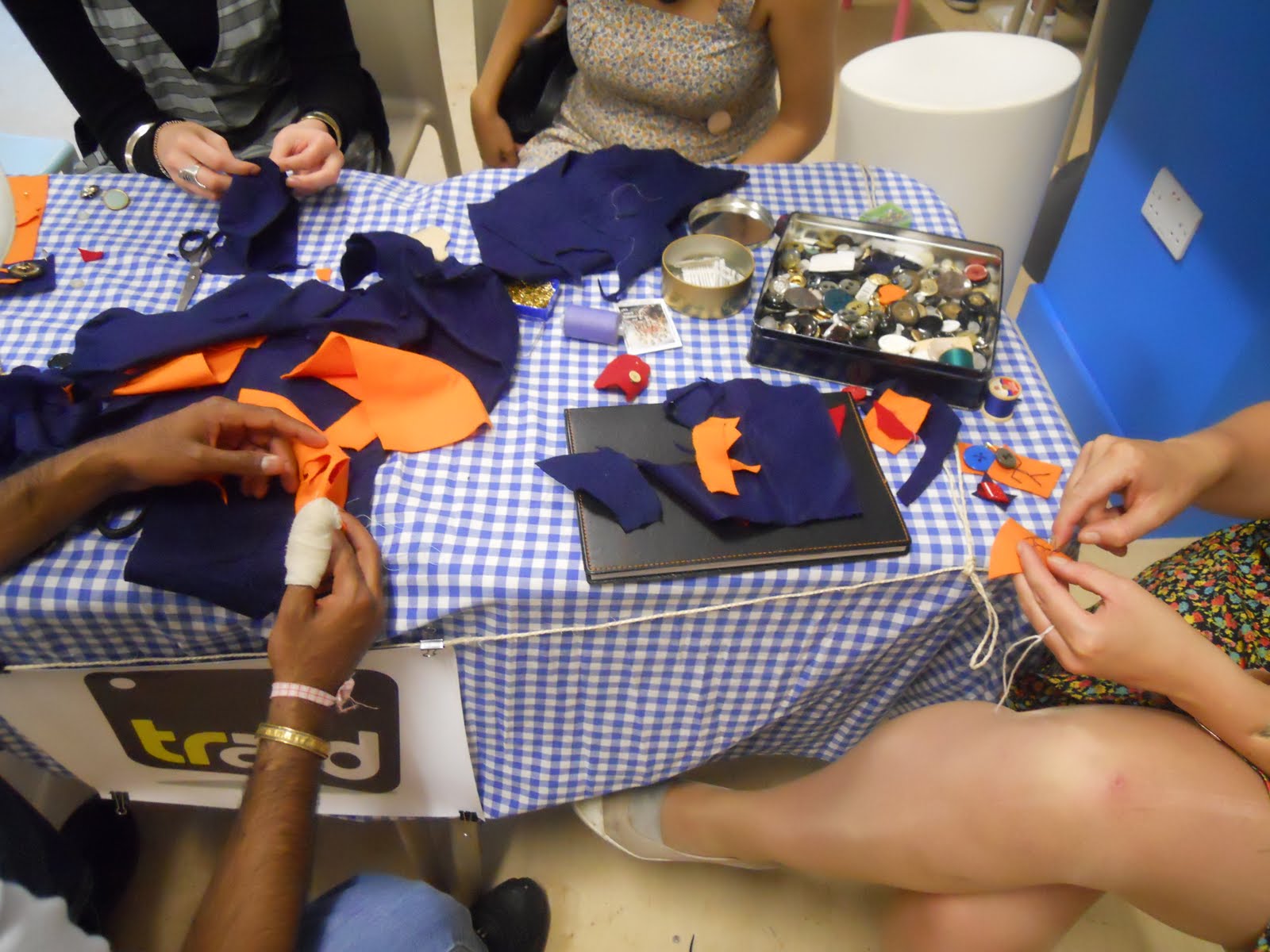
We had sewing machines for customising, filming of Oxford Street shoppers and their thoughts about 'eco-fashion', a film about our work, exhibition of images from Green Fair and Lyla from Traid with their wonderful button sewing sessions. The quiz questions ended the evening and were tricky but made people think about the issues in a fun way.

We also met the girls from the MA Ethical Fashion girls from Epsom, who won tickets to the Clothes Show by creating the most popular FASH/OFF outfit.


Thursday, June 24, 2010

Twitter@upcyclefashion

I finally decided to set up a twitter account, with regular updates for upcycled-fashion and contemporary cultures for contemporary clothing.


http://twitter.com/@upcyclefashion

Monday, June 21, 2010

Ethical Fashion Forum Social June


You are warmly invited to FASH/OFF: The June Ethical Fashion Forum Social


Held in collaboration with MA ‘Fashion and the Environment’ students from the London College of Fashion.

With exhibits, hands on activities and networking, come along for thisfun, free EFF social on Thursday 24th June from 6.30pm. See how EFF workcollaboratively to raise awareness of environmentally and ethically sustainable issues within the fashion industry, and be excited by the innovative and radical approaches to sustainable fashion which makes this the fastest growing movement in fashion!

Get a group of friends together and enter into our FASH/OFF competition. Your challenge will be to create a beautiful garment/outfit from a small collection of unwanted ‘waste’ garments,
in just one hour!All equipment will be provided – just bring your team and get creative! If you have something gathering moths in your wardrobe - bring it along and revive it!

Throughout the evening you will be able to view the work of the MA students and take part in practical workshops and discussions. A specialist fashion quiz will conclude the activities focusing on the issues explored throughout the evening.

Thursday 24th June 2010
6.30pm - 9.30pm
UAL Hub, 272, High Holborn, WC1V 7EY

Don't miss out - come to FASH/OFF :INFORM:RECREATE:ENGAGE:INSPIRE

For further information or to rsvp please contact: marketing@ethicalfashionforum.com

www.ethicalfashionforum.com

Friday, June 18, 2010

Creative Alterations@Make Lounge


I bought this dress from a small boutique in covent garden about 4 years ago and have worn it occasionally but always like the print more than the style as it just seemed too baggy at the bottom - it's a funny length to have an elasticated hem. As I looked through my wardrobe for items to take to the Creative Alterations class at The Make Lounge, I found this dress and thought it was the perfect garment to take along and alter. I hadn't worn it in about 6 months and the baggyness of the fit was really putting me off wearing it any more, I was sure I could remake it and love it again.

I took it along to the creative alterations class at The Make Lounge up in Angel Islington that is run by Nin, who created the amazing reclaimed fashion label Goodone. There were 8 of us who attended the two part class, six hours overall.

I decided to remake the dress into a separate top and skirt. I first had to cut straight through it...
I cut off a bit of extra fabric to make a binding for the botton of the top. To make the waitsband for the skirt I used a part of a dress from another girl in the class that she had cut off as part of her alteration. I stitched this most of the way round and then attached a couple of loops to thread it through so I could get in and out of the skirt (because the waistband wasn't stretchy material).


I love this top and skirt so much more than the original shape of a dress and will wear both garments so much more, I have a new skirt and top (I'm wearing the skirt today!)

Thursday, June 17, 2010

Living and Giving Westbourne Grove

All about The Education

When discussing issues of sustainability, especially with those who do not seem to care much about it, pretty much 99% of people also follow that comment by saying that they know very little about it. Which makes complete sense, how can you be passionate or inspired or responsible for something if you don't know exactly or don't have a specific understanding about what it is?

I am sure that if I knew more about football, if I knew the history and background of the world cup, players, games, manager - and how he selected the England team, I'd be hooked to the remaining world cup fixtures. As it is I know only the bare minimum about the sport (not even offside rule) and therefore watching, talking and reading about it brings no pleasure.

When living and studing in a communtiy around people who are already inspired and knowledgeable about sustainability issues (and acting upon them in everyday life) it is hard to take myself out of that and look at the population as a whole. However, as I do so I realise I am in a minority.

The majority of people that share my passion for issues regarding the fashion industry and the environment have come from a creative background, where making and sewing in whatever capacity has been a part of thier lifestyle. Learning these skills allows you develop them and adapt them for every day 'real world' needs. Sewing on a button, replacing a zip, sewing back a hem. All these little changes that the younger generations of today are seldom taught at school, as design technology takes many other forms and pressures on timetable organisation does not prioritise such subjects. However, I feel that the lack of sewing education for schoolchildren perpetuates the lazy attitude towards consumption - that of fast fashion. Many children who don't leave school with sewing skills and who aren't taught by family are less likely to consider mending and may find it harder to take responsibility for their clothing (i.e throw it away at the first sign of wear and tear), and also find it difficult to add creative value to the garment themselves (through customisation and creative alterations).

Throughout my research time I really want to speak to as many people as possible to ask why sewing skills have faded within curriculum, and aim to get sewing skills back into schools and taught in an exciting and relevant way to all schoolchildren.

If you are a textile design teacher or head of a school that would like to pursue further textile workshops please get in touch!

Tuesday, June 08, 2010

A short tale of the Candy Stripe dress


Found in the dressing up box and displayed at the Camden Green Fair...
Explored with alternative shaping options...
Styled and altered with many ribbons by a 4 year old visitor to the Fair...

Then upcycled by Jo...

Monday, June 07, 2010

The Colour Me In Dress

To encourage collaborative work within a short space of time throughout the afternoon at the Green Fair I used a toile from a previous project and some fabric pens to create the 'Colour-Me-In' Dress.

Ethical Fashion attendees were invited to choose their favourite colour pen and to draw,doodle, colour in or write on the garment whatever and wherever they liked.

The resulting surface design was a lovely montage of childlike sketches - mainly flowers and hearts in pinks and purple. I was thinking that perhaps I would be able to wear the dress after the colour-me-in collaboration...however I think it would be best suited to a younger girl than me (!)

Ethical Fashion @ Camden Green Fayre 2010

Yesterday Regents Park in London, was home to the annual Camden Green Fair and Bikefest. Included in the festival were food stalls, green living and healthy lifestyle stalls and marquees with lots of hands on activities for the many adults and children seeking a fun day out to learn more about green lifestyle choices.

My fellow coursemates and I were running the Ethical Fashion workshop tent and Fashion Show and ShopShop marquee.Zoe was in charge of the knitting and pom pom making workshop which was a brilliant success and many people throughout the day sat and spent time with the needles and wool to make their own unique creation as a reminder of the day...
Beth was selling amazing and very yummy home made cakes to raise money towards her bike ride from London to Paris for the charity the Environmental Justice Foundation.
I was running the customising area which was mostly popular with the children attending the Green Fair. Their imagination and excitement at the thought of transforming clothes from the dressing up box to fit them was a joy to see and work with for the day.


We also had a SwapShop running all afternoon for people to swap those unwanted items for ones they will love. The swapshop ran in the fashion tent until 5pm when the fashion show began. Labels such as Annie Greenabelle, Komodo, Monkee Jeans and Nancy Dee were worn by stunning models and watched by large crowds of people who had gathered throughout the day.